
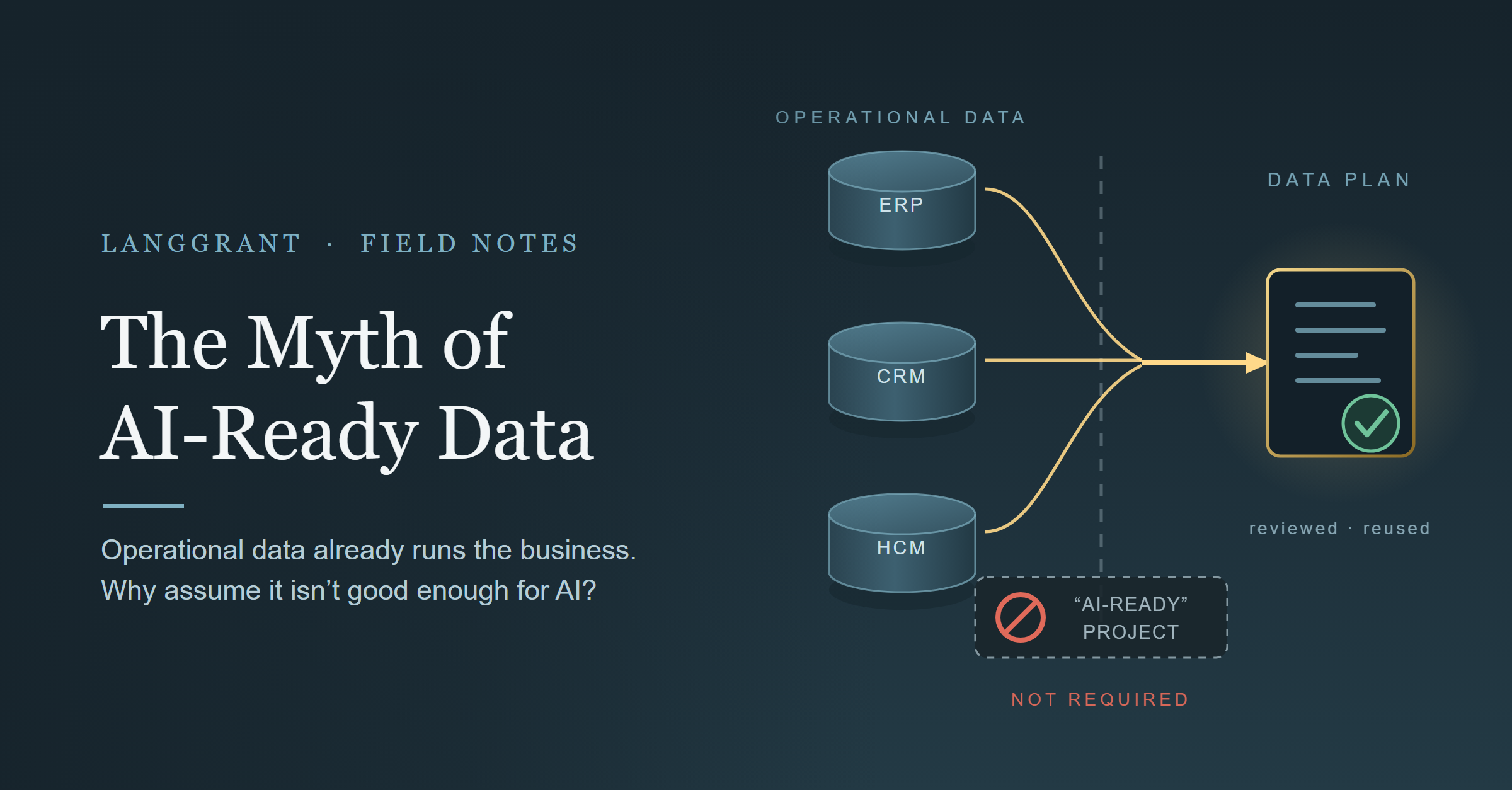
One of the biggest myths slowing enterprise AI adoption is the belief that organizations must first make their data “AI-ready.”
I believe this is no longer true.
Every day, enterprises rely on operational systems like Salesforce, Oracle, SAP, Workday, and countless others. These systems process orders, invoices, claims, payments, inventory, and customer interactions, and are relied on for financial reporting, operational dashboards, and enterprise data warehouses.
By definition, operational data is already trusted to run the business. So why do we assume it’s not good enough for AI?
The second myth is that AI requires a comprehensive semantic model before meaningful analysis can begin. That is true for traditional Business Intelligence, but advanced reasoning models change this equation.
AI models can easily infer accurate relationships, propose business definitions and metrics, and generate analytical plans directly from operational metadata (no data exposure). Proposed semantics can then be reviewed, refined, and approved by business experts, and saved to be re-used. Semantic modeling becomes a collaborative process rather than requiring months of upfront modeling.
This doesn’t eliminate governance, but changes when and how governance occurs.
AI-generated analytic plans with semantics can be saved, validated by experts, executed, and re-used as a trusted asset. Organizations can govern and refine reasoning as part of the analytical process. See Satya Nadella’s recent memo for background.
The result is a fast path to AI powered insights that gets better with use.
Is it time to re-evaluate suppositions for AI? Is it time to consider a new approach?